
At Palm Beach Atlantic University (PBA), innovation and faith are not separate pursuits, they work hand in hand to create meaningful impact in both academic and community settings. Recently, two significant milestones highlighted this integration: PBA’s first-ever code-a-thon and a featured presentation at the university’s 15th Annual Interdisciplinary Research Conference.
PBA’s First Code-a-thon: Technology in Service of Ministry
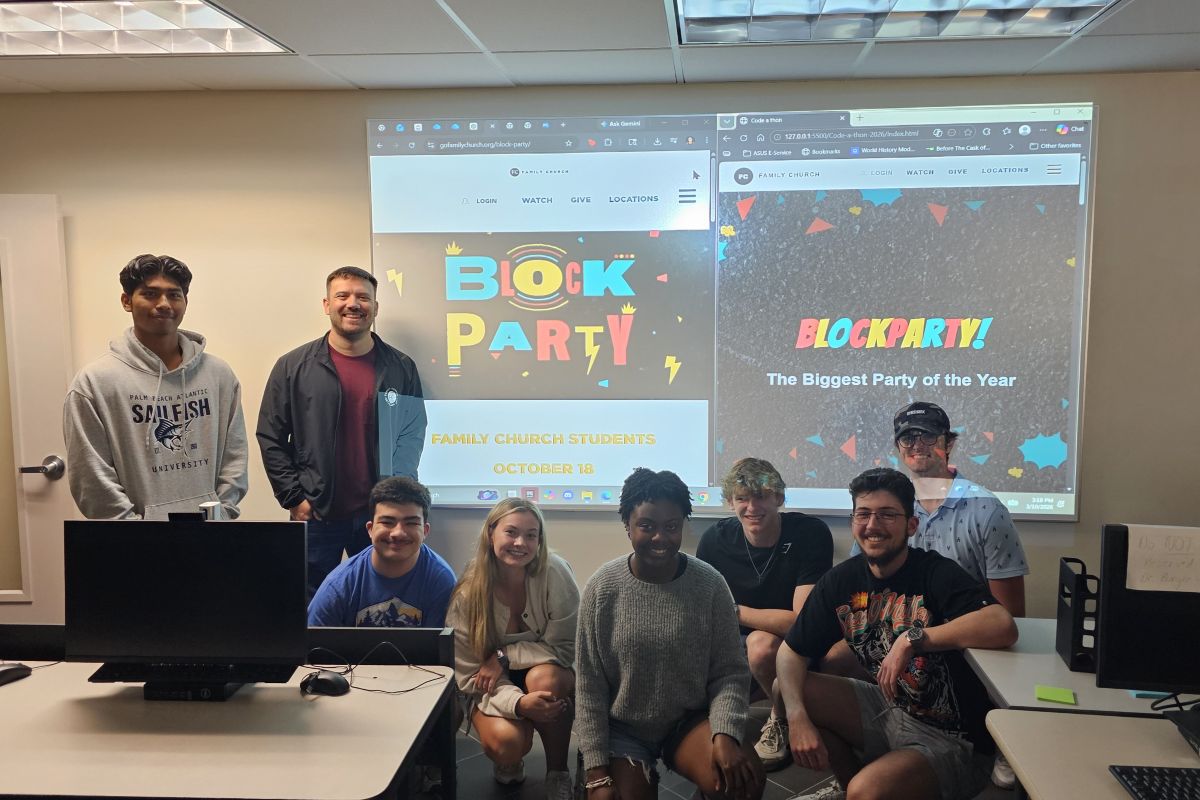
PBA recently hosted its first code-a-thon, bringing students together for a two-day collaborative experience focused on using technology to serve the local community.
Read the official article: PBA Students Harness the Power of Technology to Help Local Church
Led by Dr. Michael Kolta, students partnered with a local church to redesign and enhance the digital presence of a large youth outreach event. Unlike traditional hackathons that emphasize competition, this event focused on purpose-driven development, building tools that support ministry and community engagement.
Students worked on creating a modern, mobile-friendly website that reflects the energy and mission of the event while making it easier for families to access information and register. The project provided hands-on experience while also reinforcing the idea that technology can be a powerful tool for service.
The event reflects PBA’s broader commitment to "Workship," a model that integrates service with learning and encourages students to apply their skills in meaningful, real-world contexts.
Presenting at the 15th Annual Interdisciplinary Research Conference
In addition to hands-on innovation, PBA continues to foster academic excellence through its annual research conference.
At the 15th Annual Interdisciplinary Research Conference, a paper titled: "Trinitarian Education in the Digital Age" was presented to the university community.
This conference serves as a platform for students and faculty to share scholarly and creative work across disciplines, encouraging collaboration, intellectual exchange, and the advancement of knowledge.
While the paper was co-authored by Zachary Melton and Dr. Gregory Rummo, the presentation was delivered by Michael Kolta, highlighting his role in bringing these ideas to a broader audience.
The research explores how theological frameworks, particularly Trinitarian thought, can inform and shape education in an increasingly digital world. As technology continues to redefine how we learn and interact, this work contributes to an important conversation about maintaining depth, community, and meaning in modern education.
A Unified Vision: Faith, Learning, and Impact
Both the code-a-thon and the research presentation reflect a shared vision:
- Technology as a tool for service
- Education rooted in purpose and faith
- Scholarship that engages real-world challenges
At PBA, students and faculty are not only developing technical and academic expertise, they are also learning how to apply their knowledge in ways that make a lasting difference in their communities.
These recent initiatives demonstrate how innovation, collaboration, and faith can come together to create meaningful impact, both inside and outside the classroom.
